| | | Immigration Film Fest 13th Annual Immigration Film Fest Virtual - October 2-11
In-person - October 2-3 and October 10-11 Hybrid film festival with virtual screenings for 32 films via Eventive, and four in-person screenings in Washington, DC, on the first and second weekends of October. |
|
|
| Covenant Conversations: A series on the impacts of H.R.1 and our Communities Monday, October 12 - Climate
Monday, October 19 - Health Care & Economic Dignity
Monday, October 26 - Immigration & Global Aid 7:00 p.m. ET • 6:00 p.m. CT • 5:00 p.m. MT • 4:00 p.m. PT • 3:00 p.m. AT • 1:00 p.m. HT RSVP via Zoom for any or all sessions Join UUSJ and our partners in Covenant for Our Future for a three-part series on key topics voters care about ahead of the Midterms. Covenant Conversations are designed to immerse you in a justice-rooted space and help you understand the real‑world impacts of H.R.1. This is an opportunity to explore how those impacts intersect with our faith traditions and how we can position ourselves for sustained moral action. Guests shall include: FRAC (Food Research & Action Center) • CBPP (Center on Budget and Policy Priorities) • AFL-CIO and others. Flag: A new POLITICO Poll finds that nearly half of Americans say they can’t explain the One Big Beautiful Bill Act — and those who can are much more likely to say it’s helped others, including the wealthy, but not them. Even Trump voters aren’t very impressed by the GOP’s tax overhaul, Politico. |
|
|
| No Kings - Vote Early Events October 17th For over a year, millions of us have said it together: power doesn't belong to billionaires, strongmen, or politicians who think they're above the law. It belongs to the people, but only if we use it. This October 17, No Kings: Vote Early is not purely a protest. It is a day of voter participation and election protection. Don’t participate alone. Recruit a friend. Bring a neighbor. Take your family. Draw out the people you organize with. Because democracy isn’t something we watch from the sidelines. It’s something we build and defend together. Engage as a UU, using the specific links we offer. |
|
|
| Restoring Our Shared Democratic Project: Communities of Care and Civic Participation, by Meadville Lombard Theological School Monday, October 26
7:30 p.m. ET • 6:30 p.m. CT • 5:30 p.m. MT • 4:30 p.m. PT • 3:30 p.m. AT • 1:30 p.m. HT Register Our democracy suffers not merely a participation deficit, but a care deficit, and the two are the same problem seen from different angles. Drawing on feminist care ethics and perspectives on theological education's contributions to the civic sphere, Dr. Elías Ortega invites us to reimagine civic participation as a shared space of mutual care, with obligations that extend to future generations. |
|
|
|
|
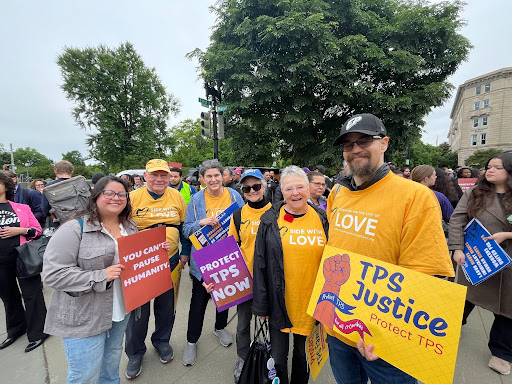
| | | Extend TPS Protection for Haitians! After Temporary Protected Status (TPS) for Haiti ended on July 27, 2026, immigration enforcement nationwide accelerated. The heightened enforcement is causing deep psychological and emotional distress for many members of the Haitian community (and other TPS holders). On August 20, more than 160 Haitians were deported back to Haiti, and as of September, the Haitian Times reported that four flights had returned, carrying more than 400 people. These returning flights have been landing in Cap-Haïtien because commercial flights to Haiti’s capital, Port-au-Prince, remain prohibited by the U.S. government due to ongoing gang violence and political instability. Congress can still help determine next steps for affected Haitian families by extending TPS protections through legislation. In April 2026, the House of Representatives passed a bipartisan bill to extend protections for Haitian TPS holders until April 2029. The bill now awaits Senate action. |
|
|
| No Detention Expansion in Alexandria, Louisiana Join Detention Watch Network, of which UUSJ is a member, to oppose the proposed 528-bed facility at England Airpark in Alexandria, Louisiana, and say no to a new ICE facility for families and unaccompanied children. See Facebook video summary by MSNOW. The Trump administration has been expanding the immigration detention system for almost two years and is planning to open a new facility intended to house families and kids. The administration has also reduced funding for legal representation for unaccompanied children, although some of these actions have been partially blocked by the courts. |
|
|
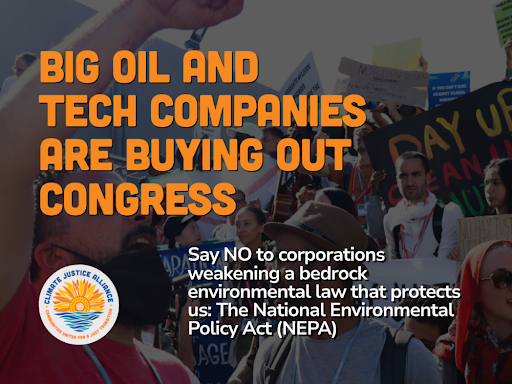
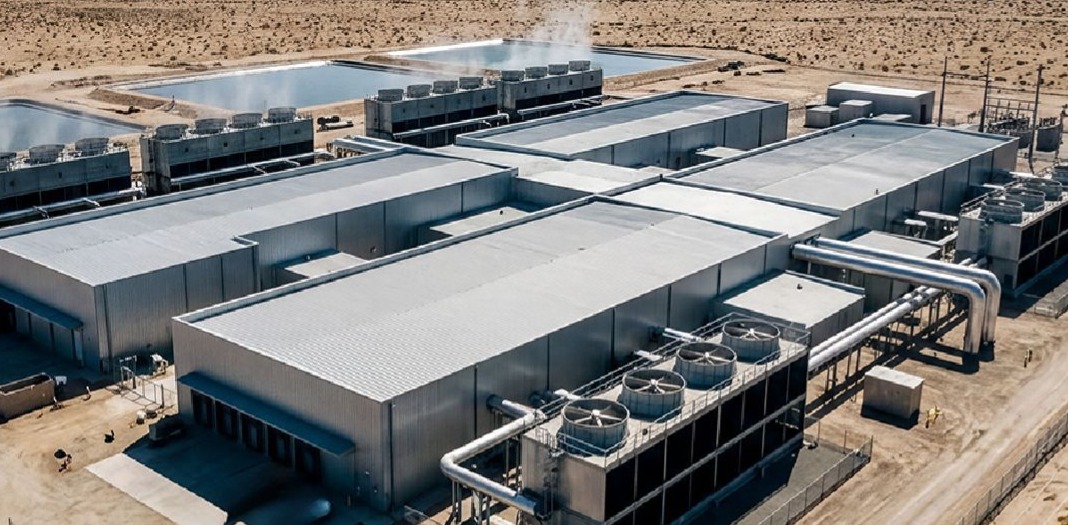
| | Permitting Reform in Motion We can all agree there are serious challenges to deploying good public infrastructure, but most of us also care about clean air and clean water. Many of us don’t want AI data centers in our backyards. We do want access to outdoor spaces that are safe for kids to play. Join our friends in People Versus Fossil Fuels, The Climate Justice Alliance (CJA) and take action on permitting reform, voice your grave concern regarding Congress’s negotiations on so-called “permitting reform.” The National Environmental Policy Act (NEPA) is a bedrock environmental law that is under attack. It requires the government to report on the environmental impacts of infrastructure projects (like data centers) and allows communities, Tribal Nations, and the public to review those impacts and provide comments before the government makes its decision. |
|
|
|
|
| | | NILC launches Solidarity Guide The National Immigration Law Center (NILC) is sharing a resource that may help your organization and community: its Solidarity Guide. The guide outlines simple, clear, and effective actions you and your organization (Congregation) can take to defend immigrant communities. It provides tailored actions for citizen allies, healthcare providers, business owners, educators, and non-citizen immigrants or citizens who live in mixed-status families |
|
|
| Solidarity Summits by UU The Vote and local Partners Attend one of the October regional Interfaith Justice Training & Practice Gatherings – Solidarity Summits. In association with local UU partners, these summits are an initiative of UU the Vote, a program of Side With Love, the organizing strategy team of the Unitarian Universalist Association. These gatherings bring together Unitarian Universalists, people of faith across traditions, lay leaders, organizers, advocates, and community partners to strengthen regional networks, deepen relationships, and practice the kind of solidarity this moment demands. |
|
|
| October Board Meeting Our Trustees will meet on Friday, October 9; for more information, email [email protected] |
|
|
|
|
| Immigration Justice
Steve Eckstrand, Immigration Action Team Convener ([email protected]) |
| | | GAO Sounds a Taxpayer Alarm Some parts of government still work. “Since January 2025, U.S. Immigration and Customs Enforcement has invested billions to expand detention capacity through six initiatives—including one to purchase and renovate warehouses. ICE purchased 11 warehouses for $1 billion. We found that ICE pursued this and the other initiatives without necessary analysis and planning.” Immigration Detention: Urgent Planning Needed to Avoid Further Waste of Taxpayer Dollars, General Accounting Office. |
|
|
| ICE has stopped listing key detainee location information During September, the Department of Homeland Security (DHS) stopped listing people with final deportation orders in its online locator. See Immigrants with final deportation orders disappear from ICE detainee locator, WaPo. Nearly 16,000 people who entered ICE detention in July were subject to final orders of removal – a third of the population that ICE was detaining that month. Also see Gone in 90 seconds: an ‘invisibilized’ ICE is arresting more people than ever, The Guardian. In addition, DHS is forbidding officers from communicating by phone about the location of people in ICE custody. No official announcement about this policy change was made, leaving attorneys and family scrambling for information. This policy change is cruel and will likely speed up deportations, making it harder to file last-minute legal challenges. (Individuals who are actively appealing a judge’s decision may still qualify for humanitarian protection). |
|
|
| Five Afghans admitted to the U.S. as refugees since January 2025 Stars and Stripes reports a Plan to defund the resettlement program for Afghans who aided the U.S., putting its future in doubt. More than 260,000 Afghans await resettlement in the U.S., including 3,000 family members of active-duty service members. While most are still in Afghanistan, thousands are in third-party countries, including over a thousand at a former U.S. military base in Qatar. These Afghans have been waiting more than five years, with no end in sight. |
|
|
| 2027 Refugee Determination Goal, an insult and betrayal Adding insult to injury, especially for our Afghan allies, the Trump administration confirmed that nearly all of the people who will be invited to live in the United States during FY27 will continue to be white South Africans (Africaners). In September, the administration told Congress it will likely limit refugees to 17,500 for the FY27 Presidential Determination on Refugee Admissions. This would be a second record-low number, matching its FY26 number for rollbacks on refugee protection since the program was created about 50 years ago. They have already banned people from most countries from the program. In an Interfaith Immigration Coalition (IIC) Press Release, UUSJ and UUSC said (excerpts): Pablo DeJesús, Executive Director of Unitarian Universalists for Social Justice, said: “The reported preference for ‘primarily’ Afrikaners shows a profound indifference to what our U.S. refugee system should be about.” Rev. Mary Katherine Morn, President and Lead Executive Officer of the Unitarian Universalist Service Committee, said: “The Trump administration is once again using executive authority to pander to white nationalists and other extreme-right groups." |
|
|
| Articles Shared By The Team - Immigration Fact Sheets (fabulous information, state by state), FWD.us
- Republicans Break With Trump After Immigration Crackdowns, Washington Sun
- DHS Sec. Markwayne Mullin defends ICE in Oklahoma shouting match, The Oklahoman
- ICE Detention Claims 25th Life Since the Start of the Year, Kocher Substack
- Federal Court Weighs Immigration Detention Without Hearings, AIC
- ICE arrests keep soaring. Why they are not leading to more deportations, Yahoo News
- Pelham community rallies behind Roberto Avalos-Magellon, Lol…, SCR
- ICE is looking into 'mobile detention facilities', NPR
- Immigration Group Sues Trump Admin Over Maryland Arrests, Washington Sun
|
|
|
|
|
| | | Boldly Ignoring Families in Need Congress is negotiating funding levels for the 2027 fiscal year for roughly one-fourth of the federal budget through annual appropriations. The Center on Budget and Policy Priorities finds, House Republican 2027 Funding Bills Fall Far Short of What Is Needed to Help Families, Support Core Services. While House appropriators have approved all 12 appropriations bills, largely along party lines, their Senate counterparts have yet to match that enthusiasm. The House bills would cut 2026 non-defense appropriations by 6.0 percent. While these cuts are smaller than the President’s proposed 13 percent cut, they still slash important programs and fall far short of what is required for important non-defense public services. These are core government functions and investments that meet our nation’s needs. Meanwhile, USA Today asks, Rich Americans use IRAs to make tax-free millions. Is that fair? |
| |
|
| The House May be Coming for Non-Profits Accounting Today reports that House Republicans target tax-exempt groups. The House Ways and Means Committee held a hearing to advance GOP-sponsored legislation that would require more disclosure of foreign sources of funding for tax-exempt groups. They did assert that religious faith-based organizations would be protected from losing their tax-exempt status based on their beliefs. But it is unclear if that would be a broad, pluralistic protection for faith actors – as UUSJ might support – or a targeted exemption for those faith traditions that are in vogue among Members or with the White House. Disturbingly, McCarthy-era-style language was present in comments by committee chairman Jason Smith, R-Missouri: "Too much of the tax-exempt sector operates in darkness, deliberately hiding in the shadows to avoid scrutiny. This committee has uncovered incidents of organizations abusing their generous tax benefits while seeking to divide Americans, sow chaos in our communities, and manipulate American politics and public life." |
| |
|
| Big Tech Tax Breaks for AI and Data Centers One of the new power couples in DC since summer 2025 (read OBBBA) has been the Trump Administration and Big Tech, the Silicon Valley Bros. Common Dreams covers the issue with, Trump Pushes AI Data Centers on Public Land as Big Tech Reaps Billions in Tax Breaks. A recent report found that Big Tech is receiving tens of billions of dollars in tax breaks for AI investments they were already likely to make. The US Bureau of Land Management (BLM) is reviewing proposals for at least 12 data centers and related infrastructure projects on 17,600 acres of public land across Arizona, Idaho, Nevada, Oregon, Utah, and Wyoming, according to an investigation by The Washington Sun’s Mara Hoplamazian and Jade Lozada. |
| |
|
| Elon and Taxes: The Rocket Fuel of Unrealized Gains Counter Punch says Elon Musk’s Fortune Comes From Not Paying Taxes. They found that his fortune's valuation trends up and down, best exemplified when Musk was briefly worth around $1.45 trillion, but then SpaceX stock slipped, rallied, then dove. One thing’s for sure: the rocket fuel for his wealth is not having to pay taxes on unrealized gains – 94 percent of “Musk’s fortune effectively comes from not paying taxes.” |
| |
|
| Economic And Tax Policy Clippings - The Trump Dividend Checks Have Already Gone Out. Just Not to You., New Republic
- The IRS Is Cracking Down on a Favorite Way the Ultrawealthy Pass On Money, WSJ
- CEO pay has skyrocketed since 1978, EPI
- “High Flyers 2026” Reveals How Private Jets Costs Taxpayers and the Planet, IPS
- TurboTax Maker Intuit Paid Zero Federal Income Tax in 2025, ITEP
- Billions in Taxes Go Unpaid. Under Trump, the I.R.S. Won’t Say How Much., NYT
- Hollywood presses Congress on Trump-backed film tax incentive, Politico
- Replacing the New Dual Deduction System for Charitable Contributions with a Simpler and More Effective Universal Charitable Incentive, TPC
- $5,000 Dividends Would Cost $1.2 Trillion, CRFB
- Crapo, Wyden Announce Reporting of Taxpayer Service Bill, TaxNotes
- California wealth tax holds narrow lead, Politico
- ‘Major Momentum’ as California Democratic Party Endorses Billionaire Wealth Tax, Common Dreams
- The debt-to-wealth ratio: A missing lens on the U.S. government’s fiscal capacity, Equitable Growth
- Section 301 & 338 Tariffs Replace Less Than 60% of Lost IEEPA Revenue, CRFB
- Blanche Gives G.O.P. Senators Written Assurances on Trump’s I.R.S. Deal, NYT
- Congressional Republicans Say D.C. Shouldn’t Be Allowed to Run Its Own Tax System, ITEP
|
|
|
|
|
| Environmental and Climate Justice
To connect with UUSJ about our activities ([email protected]) |
| | Permitting Reform Deal Moving The big news on environment and climate issues, which came late in September, is permitting reform. Earlier this week, Politico reported that Senate negotiators reached a deal on permitting text. That added weight to prior reports when Grist telegraphed a deal; Gas, solar, and tech companies all want this bill. Will Congress pass it? As the bill's features and deal contours began to emerge, many environmental justice advocates grew increasingly concerned. On September 30, U.S. Senators Sheldon Whitehouse (D-RI), Shelley Moore Capito (R-WV), Martin Heinrich (D-NM), and Mike Lee (R-UT) introduced the Bipartisan American Affordability and Jobs Act of 2026 (Press Release)(initial Bill Text). The co-sponsors want to pass it before year’s end, likely after the 2026 Midterm election Now that the bill text has been released, the specific, more public analytical process begins, as do the bare knuckle Hill politics: The Senate's permitting deal could be in trouble in the House already, Ari Natter, Bloomberg. “From what I've seen, Senators Whitehouse and Heinrich have done some good work, but they've been negotiating from a position of weakness and the tentative deal unveiled today raises significant questions and concerns that would have to be resolved before most Democrats could support it.” - Rep. Jared Huffman, D-CA-2, Ranking Member, House Natural Resources |
|
|
| How we approach this work Note that, in July 2026, both UUSJ and UUSC joined a letter organized by The Climate Justice Alliance outlining concerns on permitting (Press Release)(Letter), and in 2025 UUSJ took a strong stance opposing the SPEED Act, which had similar tenets at play in the bill. While we are starting our bill text analysis, and making consultations, we have voiced concerns about many of the factors being discussed in earnest now that the deal is public. At UUSJ, our theory of change and advocacy approach is anchored in the acknowledgment of root harms and transparency about root causes. We ask, what does our faith tradition have to say about this particular gordian knot, or complex of countervailing interests? We then look to be in solidarity and honor community impacts and lived experience, thinking closely about our moral owners. Correspondingly, our posture on any given legislative proposal is rooted in justice even when we are being hyper practical or pragmatic. But this also means we regularly go against the grain with the Hill thinking, and often eschew putting a “win” on the board for the sake of a victory lap. |
|
|
| Deregulation versus Permitting The Climate Justice Alliance (CJA), WE ACT for Environmental Justice, the Western Environmental Law Center (WELC), and the Indigenous Environmental Network immediately began sounding the alarm about negative impacts for communities: Broad Coalition Demands Affordable, Safe Energy, Rejects Polluter-Driven Permitting Reform. So did Food and Water Watch: Bipartisan Permitting Reform Plan is Danger to Public Health, Enviro Protection, States’ Rights. Also see: But some rather influential actors are celebrating the proposal: Thus, a robust debate is kicking off on the financial, regulatory and social costs. In gross terms: - On the one hand, the impulse to clear barriers for clean infrastructure and decarbonize America, as embodied in the bill.
- On the other hand, the profound concern this is fundamentally a deregulatory push that puts special interests above community interests.
In some ways, it's the “how” that's being contested, not the "why." |
|
|
| Clear as Mud, True as Justice Permitting is clearly making for strange bedfellows, much like the related issue of data centers and AI. Nevertheless, given how the Trump administration is obstructing clean energy – and why it raises your costs, EDF, and Trump’s War on Solar & Wind: A Timeline of Recent Federal Actions, Third Way, it is somewhat surprising. That liberals and progressives, as well as some moderates and conservatives – even the Trump White House – report an interest in advancing solutions that provide clean, affordable energy and now deem permitting reform the appropriate vehicle, is somewhat shocking. The mounting interest in A solar industrial complex is turning Republicans into believers, Politico, might be the reason. Whether permitting reform will enhance democratic process, transparency, or accountability, or simply fast-track more large projects at the cost of the National Environmental Policy Act (NEPA), the Endangered Species Act, and consultations under section 106 of the National Historic Preservation Act, is less clear. The justice position remains true: we want improvements in technology and progress toward sustainability for our built environment, while also protecting accountability to communities, our health, human rights, and our interdependednt web of life. |
|
|
| Data Center Level Set The following article by Common Dreams is catching attention, Welcome to the Plunderdome: How Big Tech Sold Out Its Climate Pledges to Power AI, as the issues of data centers and AI are more thoroughly explored. We’ve been following our friends at Food and Water Watch (FWW) and We Build Progress (WBP) on data centers, as well as the Union of Concerned Scientists (UCS). But our colleagues at Create Climate Justice brought the work of the National Association for the Advancement of Colored People (NAACP) and Honor the Earth (HTE) on data centers to our attention, to help highlight the perspective of organizations with accountable relationships and community perspective. See: |
|
|
| |
|
| Defending Our Democracy
Fred Van Deusen, Democracy Action Team Convener ([email protected]) |
| Sharp elbows, regular folks are not the only ones A running joke this election cycle is that the DNC (Democratic National Committee) stands for “Do Not Contribute.” The WSJ reported, The Democrats’ Biggest Donors Have Gone on Strike, citing the case of George and Alex Soros as an example. They gave more than $1 million during the 2022 midterm election cycle. This year, the DNC has not received a dollar from them. The joke may have started among the big donor class, but it has slipped into the mainstream among smaller dollar donors, as we head toward the Midterms. With these pivotal midterm elections ahead of us, the Democratic fundraisers have an unresolved big donor problem. |
| |
|
| | | Help Staff Your Local Polling Place Our elections depend on ordinary people who make sure voting runs smoothly and everyone's vote is counted—people like you. You can help ensure safe, fair, efficient elections for all: step up and become a poll worker for the next election in your community today. Register Online (as a UU) |
|
|
| Rapid Response Checklist for UU Churches The Rapid Response Checklist for UU Churches is a crisis response framework that blends practical preparedness with Unitarian Universalist values. It organizes congregational readiness into five core categories: - Leadership & Role Assignment
- Communication & Alert Infrastructure
- Legal & Community Partnerships
- Training & Preparation
- Logistics & Immediate Support
This checklist helps you get started thinking through rapid response as a sequential process to build toward. It helps you identify the roles, means, infrastructure, and capacity to support rapid response in an ongoing way. Related Resources: |
| |
|
|
|
| UUSJ is a tax-exempt 501(c)(3) nonprofit organization.
Contributions are tax-deductible as allowed by law. |
| |
|
| |
|
|